

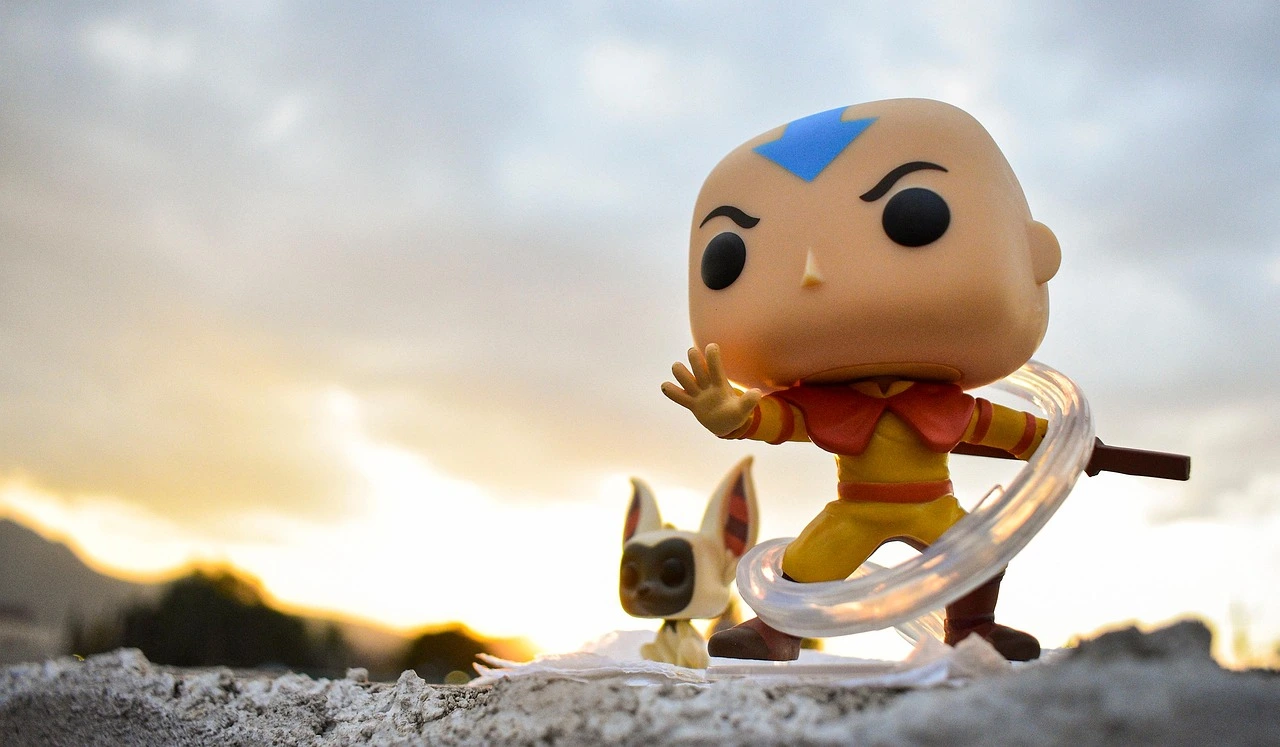
No one would have thought how much Avatar: The Last Airbender would rock the Western animation when it first aired in 2005. At that time, American cartoons were more or less divided into two types: bawdy adult comedies and pure children’s entertainment. There was no other animated series that tried to create a serious and continuing story that could be liked by various age groups.
What Michael Dante DiMartino and Bryan Konietzko produced was something never seen before: a series of animated epics that respected its young viewers and created a story that was sophisticated enough to appeal to adults. Betting on a continuous story arc was as exciting as placing bets on a lucky 7 casino game, and the payoff proved revolutionary for the entire industry.
Watching Aang and his companions develop and face challenges over the course of three seasons revealed something vital: children could follow intricate plots. They were able to manage complex issues like war, genocide, and moral ambiguity, and recall character development from dozens of episodes. Executives’ perceptions of what animated shows could accomplish were totally changed by this.
What Made the Show Stand Out?
1. The Production Quality
Although they maintained their own visual aesthetic, the developers borrowed greatly from anime. However, the battle choreography was what really made it stand out. To ensure that each bending style represented actual combat tactics, they actually employed martial arts advisors. For example, waterbending originated from tai chi, earthbending from Hung Gar kung fu, firebending from Northern Shaolin, and airbending from Ba Gua.
This wasn’t merely a showpiece. It enhanced the battle scenes’ visual appeal and gave them significant cultural and narrative significance.
2. Characters That Actually Evolved
Before Avatar, character growth in children’s shows was either nonexistent or would be reset by the next episode. Avatar completely changed this. The show gave us actual character development throughout the entire series. Out of animation, the story of Zuko and his journey to redemption was one of the most discussed characters in the history of TV.
The show proved that young audiences were able to understand how personality change could be slow, could experience long-term plotting, and could deal with morally ambiguous characters. This made everything possible. Suddenly, television series like Gravity Falls, The Dragon Prince, and Steven Universe were able to delve into their characters with a comparable level of complexity.
3. Serious Themes Treated Seriously
Avatar addressed themes rarely seen in children’s animation with remarkable sophistication. The show openly explored imperialism through the Fire Nation’s century-long war, genocide through the Air Nomad massacre, disability through Toph’s blindness, and trauma through numerous characters’ experiences.
The authors trusted their audience to consider difficult moral issues rather than oversimplifying. “The Puppetmaster” employed real horror aspects to discuss the cyclical cycle of oppression, while “The Southern Raiders” challenged audiences of all ages with its confrontations of forgiveness and retribution. These weren’t kid-friendly representations of difficult subjects; rather, they were just serious subjects that were handled skillfully.
4. Cultural Representation Done Right
The series was inspired by Asian and Indigenous themes of culture and was produced with a degree of respect and scholarship that was quite unusual in Western animation at the time. The creators chose appropriate voice actors, consulted cultural experts, and made a universe that appeared real instead of developing an imaginary representation of the Easter culture.
This demonstration of respect produced richer, more captivating stories. This strategy has been subsequently used by shows like The Dragon Prince, Kipo and the Age of Wonderbeasts, and even more modern Disney productions, which carefully incorporate a variety of cultural influences.
5. Serialization Made Right

Before Avatar, it was widely believed that serialized narrative in animation was dangerous. Parents could not want to commit, kids could miss episodes, etc. That was disproved by Avatar — over the course of its run, the show maintained high ratings and grew to a dramatic ending that drew in over 5 million viewers.
Networks understood that viewers would genuinely become devoted to continuing stories and that serialization may strengthen rather than weaken viewer devotion. This was the key to the streaming era. Today, shows such as She-Ra and the Princesses of Power, Arcane, and Castlevania can run entire seasons on the story without the fear that someone might tune in halfway through the show and be confused.
The Ripple Effect
Avatar demonstrated that animation might be a respectable storytelling medium. Since its debut, animators and writers have had more creative flexibility. Projects that are animated with advanced concepts, serial stories, and composed creative teams started getting more and more investment by the studio. The success of the show started to break the myth about the cartoons being exclusively for kids and contributed to the acceptance of animation as a form of art in Western culture.
The series led to a completely new era of animation programs, which continue to push the envelope and deliver powerful stories. It is one of the most significant series in Western animation history because, in addition to being good, it demonstrated to the rest of the world what was possible.