If you’ve followed Avatar: The Last Airbender closely—not just watched it once, but revisited it years later—you’ve probably noticed something subtle: Aang’s story feels complete, yet strangely unfinished.
That’s why questions about his age and death never really disappear.
According to our research across canon episodes, companion material, and later creator commentary, most confusion around Aang doesn’t come from missing information—it comes from how his life breaks normal rules of time.
To understand what happened to Aang later in life, you first have to accept one uncomfortable truth:
Aang lived two lives at the same time.
The Two Ages of Aang (and Why Fans Talk Past Each Other)
When people ask “How old was Aang?”, they usually expect a single answer. Avatar never gives one—because there isn’t one.
Aang’s Biological Age
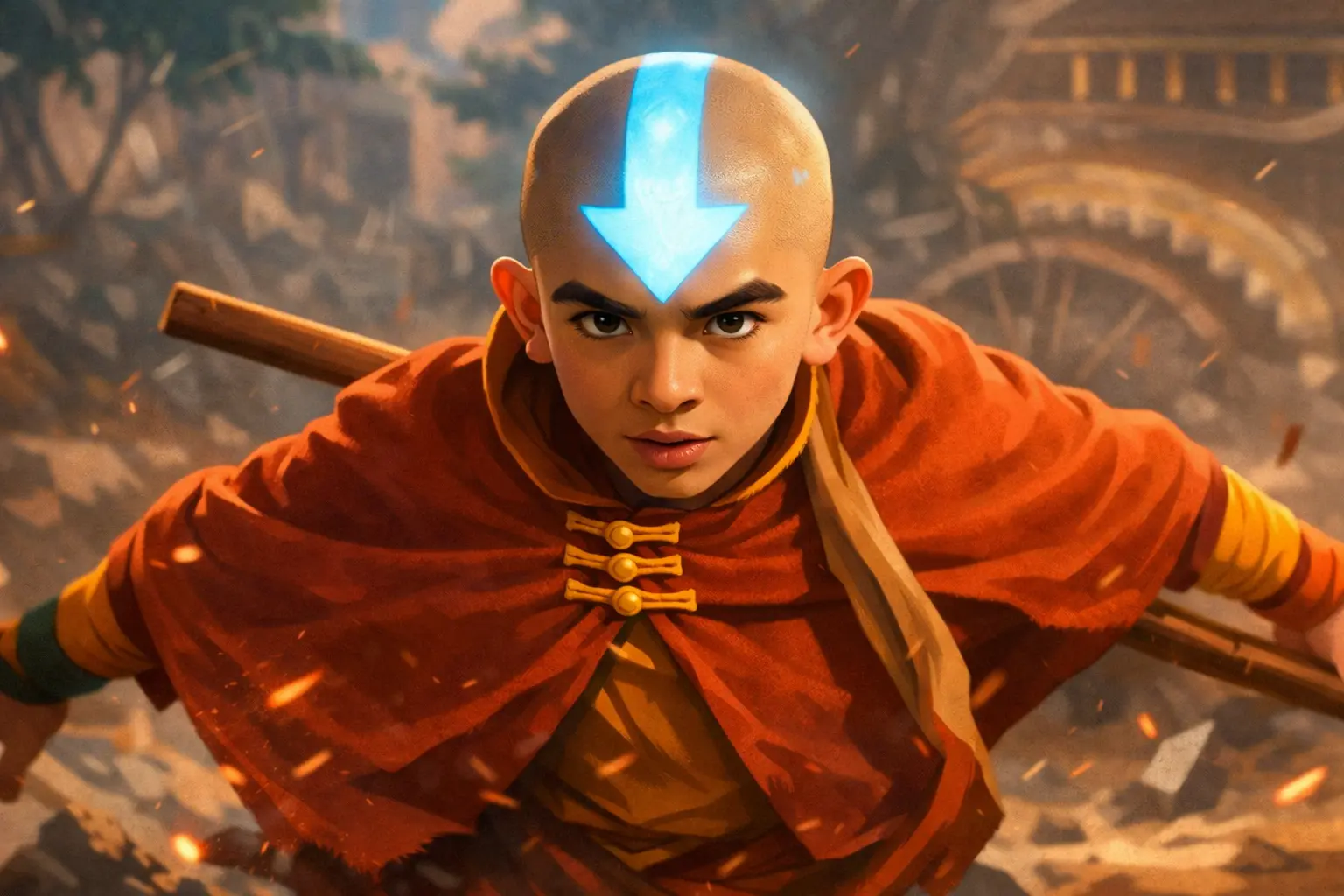
Biologically, Aang is 12 years old at the start of the series. His body and emotional development were frozen when he entered the iceberg, meaning he wakes up as the same child he was before disappearing.
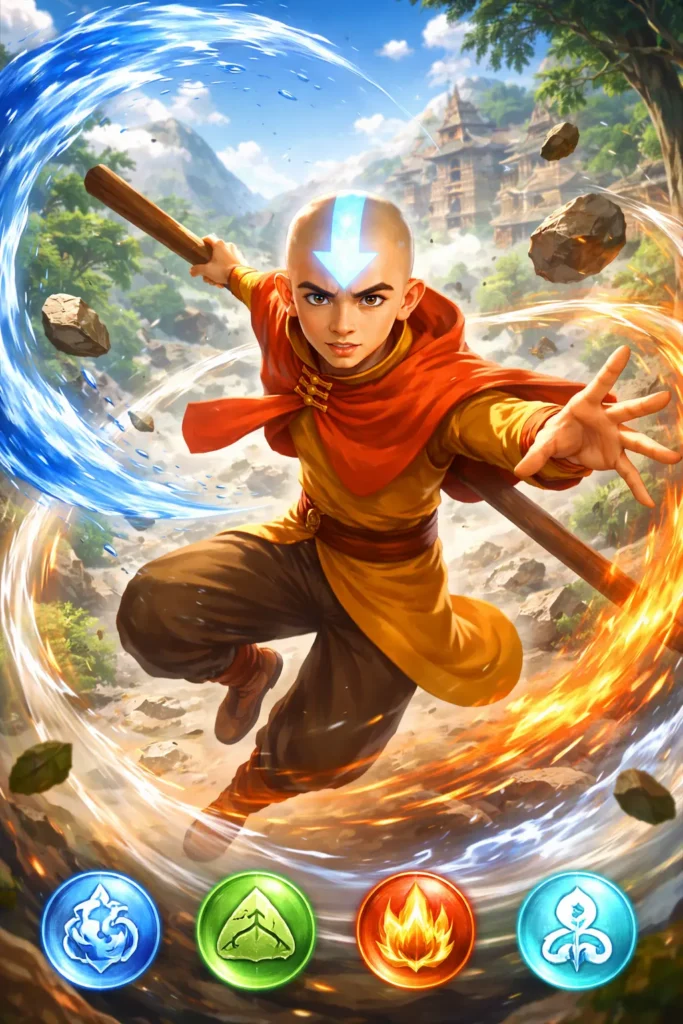
That’s why Aang jokes under pressure, avoids responsibility, and reacts emotionally rather than strategically. He isn’t an ancient Avatar thinking like an adult—he’s a kid suddenly carrying a world-saving burden he was never given time to grow into.
This tension between immense power and genuine childhood is intentional—and central to who Aang is.
Aang’s Chronological Age
At the same time, the world treats Aang as someone who has been gone for a century.
From the Fire Nation’s rise to the collapse of Air Nomad culture, a full 100 years pass while Aang is absent.
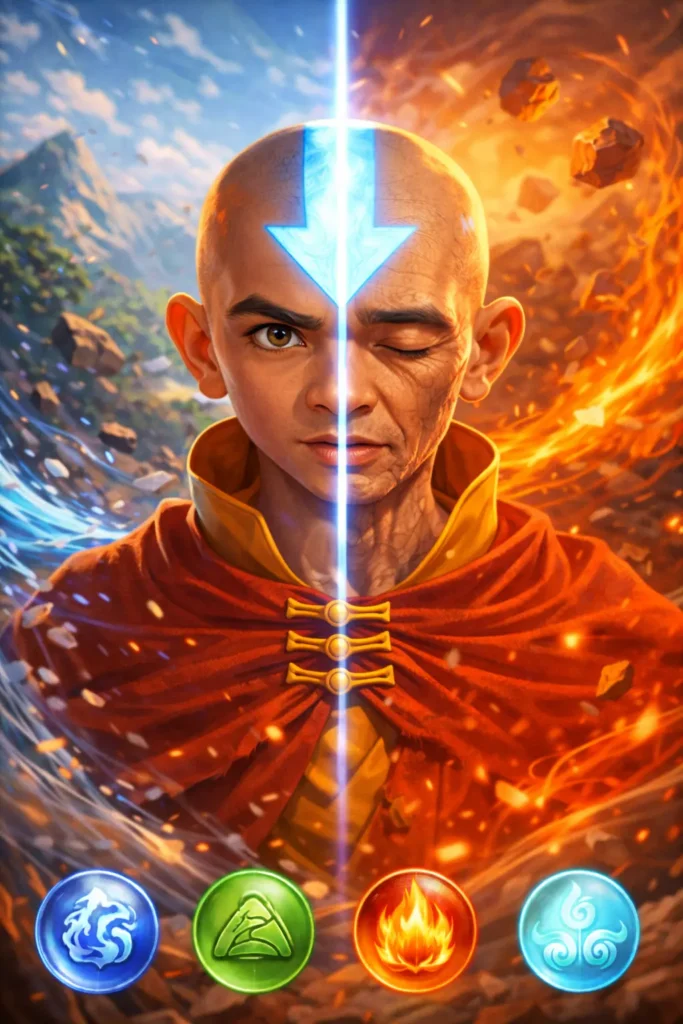
So chronologically, Aang is 112 years old when the series begins.
Both ages are canon. Neither one cancels the other.
This dual-age reality is what later creates confusion around his lifespan—and ultimately, his death.
The Iceberg Was Not “Paused Time”
One of the most persistent misconceptions is that Aang was simply “frozen” in a way that had no long-term consequences.
According to canon explanations and later interviews, that’s not how the Avatar State works.
When Aang entered the Avatar State during the storm:
It saved his life
It preserved his body
But it did not suspend time without cost
The Avatar State is not stasis—it’s constant spiritual output.
For nearly a century, Aang’s body was sustained by a force meant for brief survival, not prolonged preservation. Think of it less like sleep, and more like being kept alive by a generator that was never designed to run that long.
This distinction matters deeply later.
Why the Iceberg Years Matter More Than the War
From a storytelling perspective, the war defines Aang’s heroism. But from a physiological and spiritual perspective, the iceberg defines his limits.
According to timeline analysis from official material:
Aang does not age normally during this period
But his life force is still being expended
The cost is delayed, not erased
This is why Avatar never treats the iceberg as a “free reset.” It’s a survival miracle—but also a debt.
Aang pays that debt later in life.
Why the Show Never Explains This Directly
Avatar trusts its audience more than most modern series.
Instead of exposition-heavy explanations, it relies on:
Context
Consequences
Quiet confirmation in later material
As longtime followers know, many of the clearest answers about Aang’s later life don’t come from the original series at all—but from what comes after.
And that’s where the question of his death begins to make sense.
How and When Aang Died — What Canon Actually Tells Us
After years of following Avatar discussions, creator interviews, and expanded canon material, one thing becomes clear: Aang’s death is not treated as a dramatic event because it was never meant to be one.
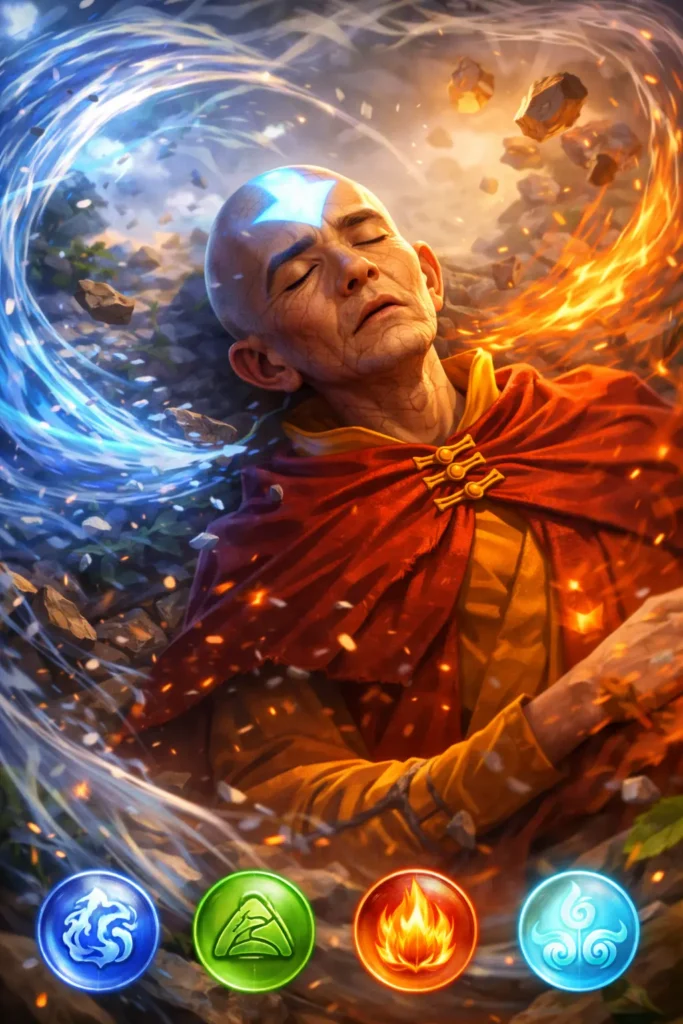
Unlike many protagonists in epic stories, Aang does not fall in battle, nor does he meet a symbolic end tied to a final conflict. According to our research into official timelines and post-series material, Aang dies quietly, of natural causes, many decades after the end of the Hundred Year War.
This fact alone surprises many fans—not because it is tragic, but because it feels understated.
When Aang’s Death Occurs in the Avatar Timeline
Canon places Aang’s death well before the events of The Legend of Korra, but long after the world has stabilized under his influence. By the time Korra is born, Aang has already passed, allowing the Avatar cycle to continue uninterrupted.
According to companion books and creator clarifications:
Aang lives long enough to rebuild balance
He sees the world enter a new era
His role as Avatar is fulfilled before his passing
This placement is deliberate. It frames Aang not as a fallen hero, but as a completed one.
Why Fans Say Aang “Died Young”
Here’s where perception diverges from fact.
From a purely chronological standpoint, Aang lived over a century. Yet fans often describe his death as “early” or “too soon.” This isn’t emotional exaggeration—it’s rooted in how Avatar frames lifespan.
Based on comparative analysis with other Avatars mentioned in canon, Aang’s active lifespan is noticeably shorter. When discussions reference him dying young, they are usually referring to his biological age at death, not his total years of existence.
In simple terms:
He lived long in years
But short in bodily endurance
This distinction is subtle, but important.
The Long-Term Cost of the Avatar State
According to statements from the creators in interviews conducted after the original series concluded, the prolonged strain of maintaining the Avatar State during Aang’s century-long absence had consequences that only manifested later in life.
The Avatar State amplifies spiritual power—but it also places immense stress on the physical body. Sustaining it continuously, even unconsciously, was never meant to be sustainable.
Medical language is never used explicitly in canon, but the implication is clear:
Aang’s body aged differently
His life force was gradually depleted
The price of survival was delayed longevity
This explanation aligns consistently across canon material and later commentary, even when it is not stated outright.
Why Avatar Avoids Turning His Death Into a Plot Point
From a storytelling perspective, Aang’s death is not meant to redefine him.
Creators have noted that Aang’s importance lies in what he changed, not how he ended. By keeping his death quiet and undramatic, Avatar reinforces a core theme of the series: balance is restored not through spectacle, but through restraint.
For long-time followers, this choice feels intentional. Aang’s life closes the same way he lived—without domination, without excess, and without needing a final display of power.
The Avatar Cycle — Placing Aang Between Roku and Korra
To really understand Aang’s death, you have to step back from his individual life and look at the system he belonged to. Avatar has never treated death as an ending in the traditional sense. It treats it as transition.
For long-time followers of the franchise, the Avatar cycle is not just a plot device—it’s the philosophical backbone of the entire world.
Avatar Roku and the Weight Aang Inherited
Before Aang, there was Avatar Roku.
Roku’s failure to stop Fire Lord Sozin early is one of the most consequential mistakes in the Avatar timeline. According to canon material and creator commentary, Aang does not just inherit the Avatar title from Roku—he inherits the unfinished consequences of Roku’s restraint.
This context matters because Aang’s life is shaped by urgency from the very beginning. Unlike Avatars who train gradually and step into balance over decades, Aang is forced to compress his growth into a fraction of the time.
From an analytical standpoint:
Roku represents delayed action
Aang represents accelerated responsibility
This imbalance affects not just Aang’s childhood, but the arc of his entire life.
Reincarnation, Not Bloodline: Clearing a Common Misconception
One of the most persistent questions fans ask is whether Aang is related to Korra.
Canon is clear on this point.
Aang and Korra are not connected by blood. Their connection is spiritual, rooted in reincarnation rather than lineage. The Avatar spirit passes on experience, wisdom, and memory—but not family ties.
This distinction is explicitly reinforced in The Legend of Korra, where Korra struggles with her connection to past Avatars rather than inheriting their certainty.
According to interviews with the creators, this separation is intentional. It prevents the Avatar from becoming a dynasty and reinforces the idea that balance belongs to the world—not to a single family.
Aang’s Death as a Necessary Handoff
Within the Avatar cycle, no Avatar is meant to linger indefinitely.
Aang’s passing is not framed as a loss of protection, but as a necessary handoff. The world he helped stabilize was entering a different era—one defined by technology, political complexity, and spiritual fragmentation.
From a narrative design perspective:
Aang belongs to a world healing from war
Korra belongs to a world struggling with change
Allowing Aang to remain alive into Korra’s era would have undermined that contrast.
According to long-standing franchise analysis, Aang’s death marks the point where the world must move forward without him—not because he failed, but because he succeeded.
What the Avatar Cycle Says About Aang’s Life
When viewed through the lens of reincarnation, Aang’s lifespan stops being the focus. What matters instead is completion.
Aang:
Restored balance after a century of absence
Rebuilt a broken world
Passed on the Avatar spirit intact
Within Avatar philosophy, that is not a shortened life. It is a fulfilled one.
This is why the franchise never lingers on his death. The cycle continues, and that continuation is the point.
Aang’s Legacy — Understanding His Life Beyond Numbers
By the time longtime fans reach the end of Aang’s story, the question of how long he lived starts to feel less important than how he lived.
This shift in perspective is intentional.
According to retrospective discussions from the creators and years of fan analysis, Aang was never written to be measured by lifespan alone. His significance lies in the world he shaped—and in the restraint he showed while shaping it.
How the World Remembers Aang After His Death
Within the Avatar universe, Aang is remembered less as a legendary conqueror and more as a restorer.
Historical references in later canon material describe him as:
The Avatar who ended a century-long war
A bridge between lost traditions and a rebuilding world
A figure whose influence remained even in his absence
Notably, the world that follows Aang does not idolize him endlessly. This, too, reflects Avatar’s philosophy. Balance is not maintained by clinging to the past, but by learning from it.
The Quiet Weight of Aang’s Choices
From an experienced viewer’s perspective, Aang’s most defining trait was never raw power—it was restraint.
He chose:
Preservation over domination
Mercy over revenge
Balance over certainty
According to long-standing fan interpretations and creator commentary, these choices came with costs. They demanded emotional maturity far beyond his years and placed long-term strain on both his spirit and body.
Yet the series never frames these costs as mistakes. They are presented as the price of maintaining harmony in a world that constantly pushes toward extremes.
Why Fans Still Return to Aang’s Story
Decades after the series first aired, people continue searching for answers about Aang’s age and death because his story resists simple conclusions.
He was:
A child who carried an ancient responsibility
An Avatar who survived by borrowing time
A peacemaker who paid for balance quietly
According to our observation of recurring fan discussions, this unresolved tension is what keeps Aang relevant. His life invites reflection rather than closure.
Seeing Aang as a Complete Life, Not a Short One
When viewed as a whole, Aang’s life does not end abruptly—it concludes naturally.
He fulfilled his role. He passed on the Avatar spirit. He left a world capable of moving forward.
In Avatar’s worldview, that is the measure of a complete life.
Conclusion: What Really Happened to the Last Airbender
Aang’s story makes sense only when age, death, and legacy are viewed together—not in isolation.
He lived outside normal time. He survived at great cost. He restored balance without losing compassion.
For those who have followed Avatar closely, this is why his story endures. It doesn’t end with spectacle or tragedy. It ends with continuity—quiet, earned, and complete.
Frequently Asked Questions
How did Aang die?
Aang did not die in battle. According to canon material from Avatar: The Last Airbender and later timeline confirmations, he lived for many decades after the Hundred Year War and passed away naturally, allowing the Avatar cycle to continue.
How old was Aang when he died?
This depends on how age is measured. Chronologically, Aang lived for over a century, but biologically his lifespan was much shorter due to the time he spent preserved in the iceberg. This difference is why fans often debate his age at death.
How long was Aang frozen in the iceberg?
Aang remained trapped in the iceberg for approximately 100 years. During this time, he survived through a prolonged activation of the Avatar State, which preserved his body but did not completely halt the long-term effects on his life force.
Why do people say Aang died young?
Fans usually refer to Aang’s biological age, not his total years of existence. While he lived long enough to restore balance to the world, the physical strain of his extended survival shortened his active lifespan compared to other Avatars.
Is Korra related to Aang?
No. Aang and Korra are not related by blood. Their connection exists through the Avatar reincarnation cycle, meaning they share the same Avatar spirit but belong to entirely different families and generations.